
Fixtures and Kitchen
Garbage Disposal Repair in Greer, SC for Jams, Leaks and Units That Hum but Will Not Spin
A disposal that hums, leaks or does nothing at all usually has one of four problems, and only some of them are worth fixing. Greer SC Plumbing Experts sorts the cause first, then says whether to repair the unit or replace it.
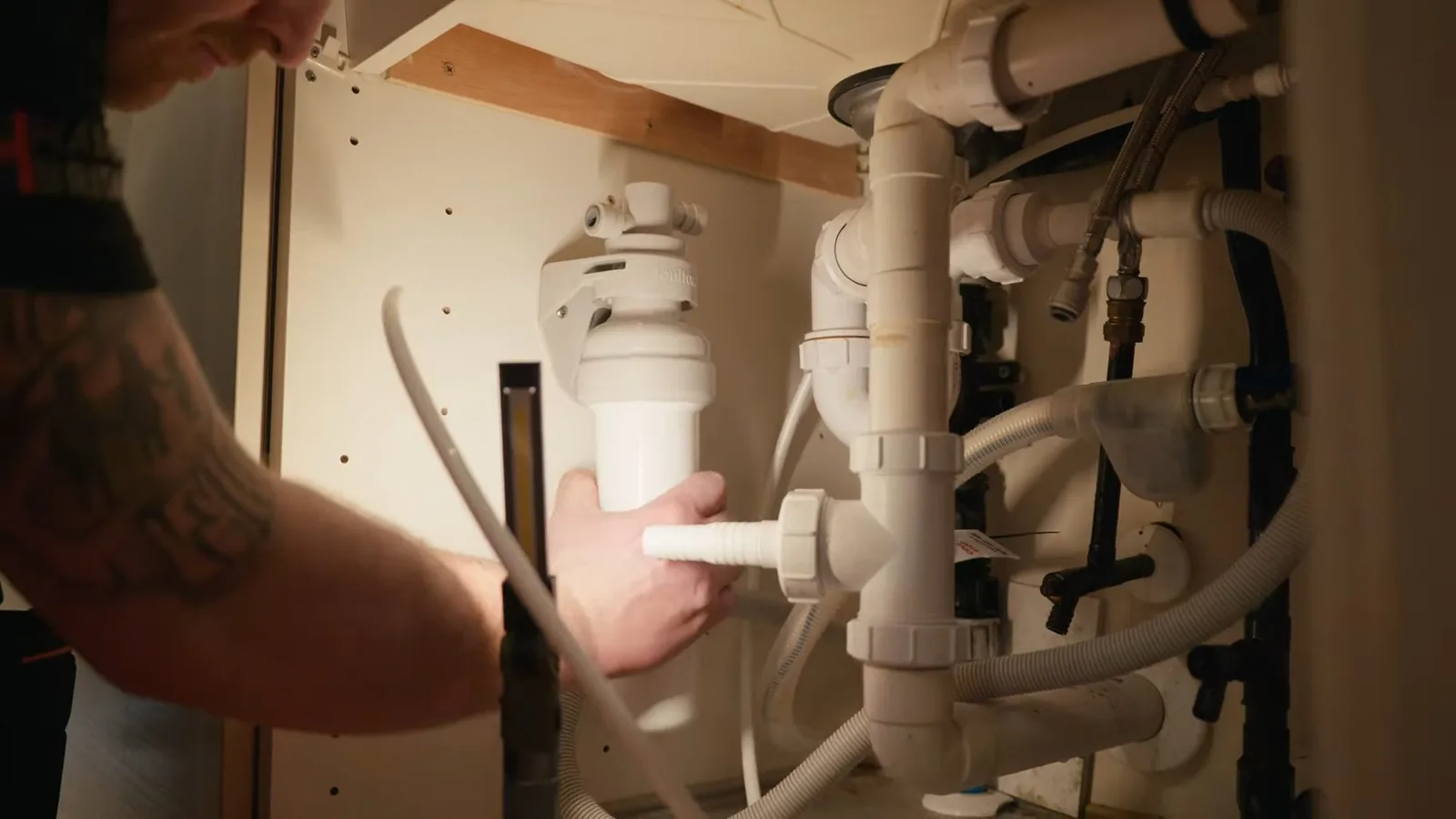
What your disposal is doing and what it usually means
| What you notice | Likely cause | Safe first step | Call when |
|---|---|---|---|
| Hums but the blades do not turn | A jam from a bone, fruit pit or utensil | Switch the disposal off at the wall, then turn the blades by hand with the wrench slot underneath | The blades will not turn |
| Silent, no hum | Tripped overload or a dead outlet | Press the red reset button on the underside, and check the breaker | It trips again right away |
| Water under the sink | A leak at the flange, the drain pipe, the dishwasher hose or the housing | Run water with the disposal off and watch where it appears | The water comes from the housing itself |
| Slow draining or a backup into the other bowl | A clogged trap or drain line past the disposal | Do not keep running the disposal against standing water | Water stays after one clear attempt |
| Loud grinding or rattling | Something hard in the chamber, or worn parts | Switch it off and look with a flashlight, never a hand | The noise returns after clearing |
These checks take a few minutes and need no parts. They cannot tell you whether the motor is worn out, which is the question that decides repair against replacement.
Never put a hand into a disposal, even when it is off. Switch it off at the wall or unplug it, and use tongs or pliers to lift out anything you can see.
Clearing a disposal jam with a hex key and the reset button
- Switch the disposal off at the wall switch, and unplug it or turn off its breaker.
- Look into the chamber with a flashlight and lift out anything visible with tongs.
- Fit the hex key or wrench into the socket at the bottom of the unit and turn it back and forth until the blades turn all the way round.
- Press the red reset button on the underside.
- Restore power, run cold water and try it briefly.
If it jams again, or the motor hums without turning after a clear chamber, the bearing or the motor may be worn. Repeated resets are a warning, not a cure.
Leaks: finding which joint is wet
A disposal has several places to leak, and each one calls for a different repair. Dry everything with a towel, run water into the sink with the disposal off, then watch.
- At the sink flange, the ring where the disposal meets the sink: the seal or the mounting has loosened.
- At the drain outlet pipe: a gasket or a pipe nut.
- At the dishwasher inlet: a loose clamp or a cracked hose.
- From the body, or from the bottom of the unit: the housing has failed and the disposal has to be replaced.
The first three are repairs. The last one is not. A disposal that leaks from its own housing cannot be patched, and the sooner it is replaced, the less water gets into the cabinet floor. If water has already reached the cabinet or the floor, read the notes on hidden water checks.
Describe what your disposal is doing
Tell us whether it hums, leaks or stays silent, and how old it is. We will say whether it sounds like a reset, a repair or a replacement.
Repair or replace: how to decide
Disposals are not built to last forever, and the usual signs of the end are age, a leaking housing and a motor that no longer starts reliably. The rating label on the side gives the model and often a date code.
| Situation | Usually | Why |
|---|---|---|
| Jam cleared, runs normally | Leave it | The cause was something that got in, not a failing part |
| Leak at a flange, pipe or hose | Repair | The fix is a seal, a gasket or a connection |
| Leak from the housing | Replace | A cracked or corroded housing cannot be sealed |
| Motor hums or trips, with a clear chamber | Replace | The motor or bearings are worn |
| Several repairs in a short time | Replace | The next failure is likely close |
A replacement is usually a same-visit job when the sink connections are in good shape. The old unit comes out, a new mounting ring and gaskets go in, and the electrical connection is remade.
Installing a new garbage disposal
A new installation, where there was no disposal before, takes more than a replacement. The sink needs a disposal-sized drain opening, there must be a switch or an outlet under the sink, and the drain pipe has to be arranged so the disposal and the dishwasher both empty properly.
- Check that the sink has a standard opening that fits a disposal mounting ring.
- Confirm the power source: a switched outlet under the sink, or a hardwired connection to a switch.
- Choose a motor size for the household, with a larger motor for heavier use.
- Connect the dishwasher drain to the disposal inlet where the dishwasher drains through it.
- Run the disposal and the dishwasher together at the end of the visit and check every joint.
The electrical part is where homeowners most often stop. State licensing covers residential plumbing work worth more than five hundred dollars, and an install with a hardwired connection is the kind of job to ask about before work starts.
When the clog is past the disposal
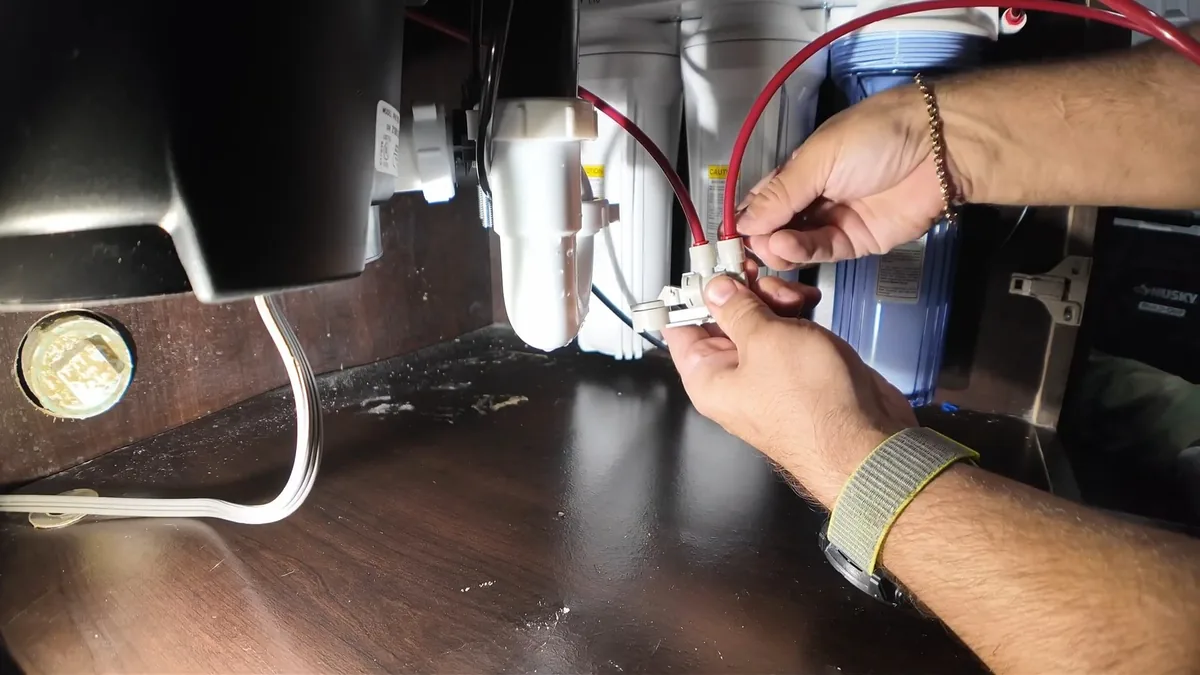
If the water backs up into the second sink bowl, the problem is usually the drain beyond the disposal, not the disposal itself. Kitchen drains carry grease that hardens in the pipe, and a disposal grinds food but does not stop grease from coating the wall. The page on clearing a kitchen drain line covers when a line needs cleaning and what to ask for.
If the drains in the house are slow at the same time, or a neighbor is having the same trouble, the cause may be the public sewer. Greer CPW runs the public wastewater system and answers at (864) 848-5500, so call them before paying for work on your own line.
Habits that shorten or extend a disposal's life
- Run cold water before, during and for about fifteen seconds after use.
- Feed it small amounts at a time, not a full sink load.
- Keep bones, fruit pits, coffee grounds in bulk, stringy vegetables and grease out of it.
- Do not put fibrous peels, such as corn husks or celery, through in quantity.
- Never pour chemical drain cleaner through a disposal, because it can damage the unit and splash back.
A disposal that smells is usually dirty at the underside of the splash guard, not broken. Ice cubes and a citrus peel clear most of it. If the smell persists, a plumber can check the trap and the drain connection.
Garbage disposal questions from Greer homeowners
Why does my garbage disposal hum but not spin?
A hum with no spin usually means something is jamming the blades. Switch it off at the wall, turn the blades by hand using the wrench socket underneath, then press the reset button. If it hums again with a clear chamber, the motor may be failing.
Can a leaking garbage disposal be repaired?
It depends where it leaks. A leak at the sink flange, a pipe joint or the dishwasher hose is a repair. A leak from the body of the unit means the housing has failed, and the disposal needs replacing.
How long does a garbage disposal last?
Many last around a decade, and heavier use or hard items shorten that. Age, repeated resets and a leaking housing are the usual signs that replacement makes more sense than another repair.
Do I need a plumber to install a new disposal?
If a disposal is replacing an existing one, it is often a straightforward same-visit job. A first-time installation needs a disposal-sized sink opening, power under the sink and a drain arrangement that works with the dishwasher.