
Water Quality and Damage
Water Softener in Greer, SC: Do You Need One, and What to Ask Before You Buy
Greer's public water is soft, which changes the first question about a softener from which one to buy to whether you need one at all. Greer SC Plumbing Experts starts with a reading at your tap, then installs, repairs or advises against a system.
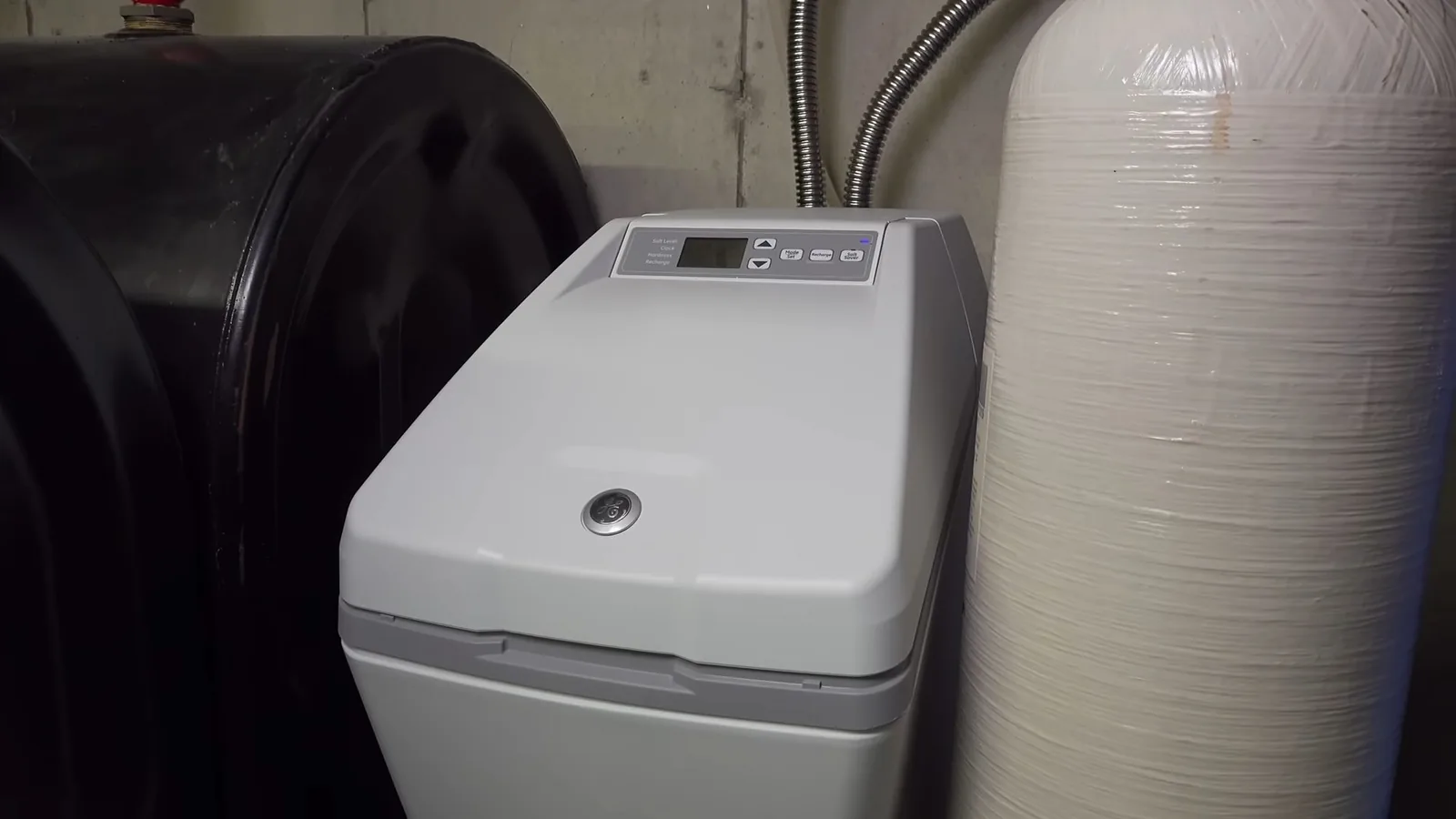
What Greer's public water reports say about hardness
A water softener removes the minerals that make water hard. Whether you need one depends on how hard your water is. Greer CPW's 2025 report lists average hardness at 34.86 ppm, about 2 grains per gallon, which falls in the soft range. Greenville Water's May 2026 report, which covers parts of the area, lists 4.9 to 6.7 mg/L, softer still.
| Source | Reported hardness | What it means |
|---|---|---|
| Greer CPW 2025 report | 34.86 ppm, about 2 gpg | Soft; little scale from the water itself |
| Greenville Water May 2026 report | 4.9 to 6.7 mg/L | Very soft; a softener adds little |
| A private well | Varies widely | Needs its own test before any decision |
| Your own tap | Whatever a strip or lab reads | The number that should decide the purchase |
A softener is built for hard water. In water this soft, it removes little, and the salt, the water used in regeneration and the purchase price are costs without much return.
Source: Greer CPW 2025 Water Quality Report, Greenville Water reports
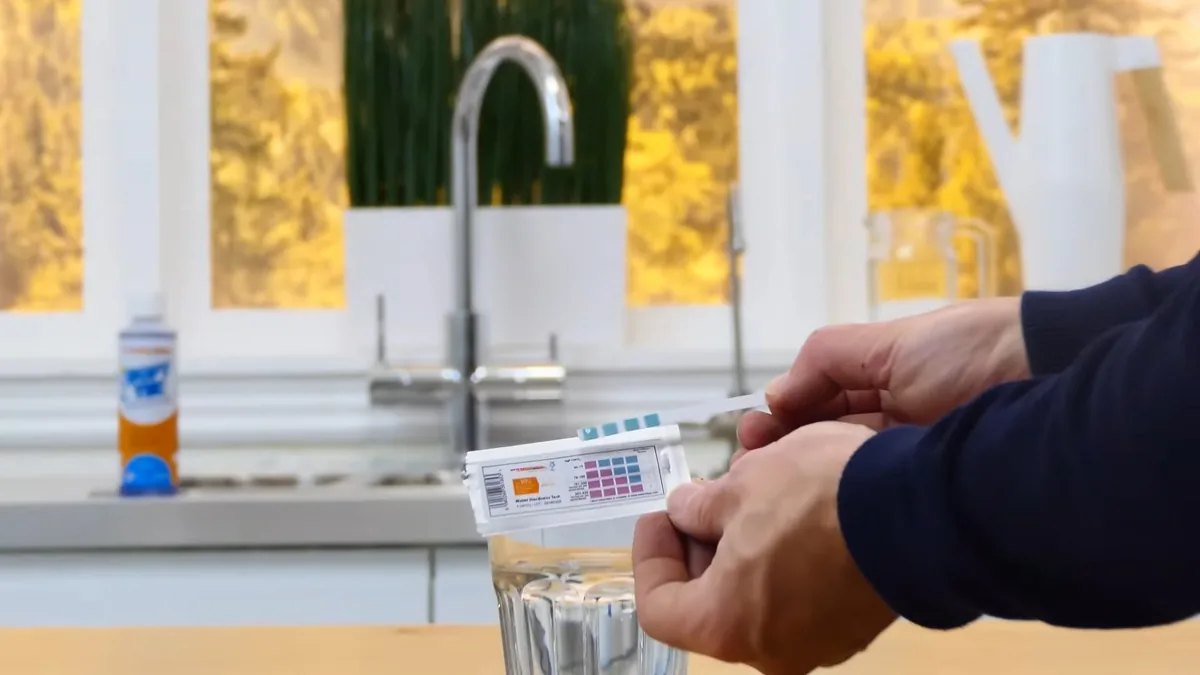
Test your own tap before you buy anything
- Ask for the hardness reading in writing, in grains per gallon, from the seller or the plumber.
- Compare it to the utility's report for your area.
- Use a test strip or a lab test at your own tap if the two disagree.
- Ask which problem the system is meant to fix, whether spots, stiff laundry, scale or taste.
- If the reading is under about three grains per gallon, ask why a softener is being recommended.
A plumber who tests first and recommends second is doing the job properly. If the answer is that you do not need a softener, that is a result worth paying for.
Where a softener or filter does make sense
- A private well with measured hard water
- A house outside the public system whose supply has its own chemistry
- An existing softener you already own and want repaired or serviced
- A taste, odor or sediment complaint where filtration, not softening, is the tool
The important distinction is between softening, which removes hardness minerals, and filtration, which removes particles, chlorine or other contaminants. They solve different problems, and a quote should say which one it is.
Whole-home filtration: what it does and does not remove
Greer CPW disinfects with chloramine, which is chlorine combined with ammonia. A basic sediment filter does not remove it, and a standard carbon filter removes it slowly. Ask any seller what the filter removes, how it was tested and how often the cartridge changes.
- Sediment filter: catches sand and rust, helps appliances and aerators.
- Carbon filter: reduces chlorine taste and odor, with a replacement schedule.
- Reverse osmosis at a single tap: removes more dissolved material from drinking water, with a small separate tank.
- Whole-home systems: more costly, so ask for test data, not just a brochure.
If your complaint is about water quality in general, ask first whether the report for your address already answers it. Greer CPW publishes its report each year, and the utility can be reached at (864) 848-5500.
Find out whether you need a softener
Tell us what you are seeing at the tap and whether you are on city water or a well. We will say whether a test, a filter or a softener is the right place to start.
Installing a softener or filter
A softener goes on the main water line after the point where outdoor spigots branch off, near a drain for the regeneration water and an outlet for power. The job usually includes a bypass valve, so water keeps flowing when the unit is serviced.
- A location with room for the tank and the brine tank
- A drain connection for the regeneration cycle
- A bypass valve so the unit can be isolated
- Power for the control head
- A test of hardness before and after the system runs
Outdoor spigots and the water heater need thought too. A plumber should say whether the system supplies the whole house or leaves some lines untreated.
Repairing and servicing an existing softener
If you already have a softener, the usual problems are salt bridges, a clogged injector, a failed control valve and resin that has reached the end of its life. Hard water coming through a unit that is supposed to soften is the clearest sign something is wrong.
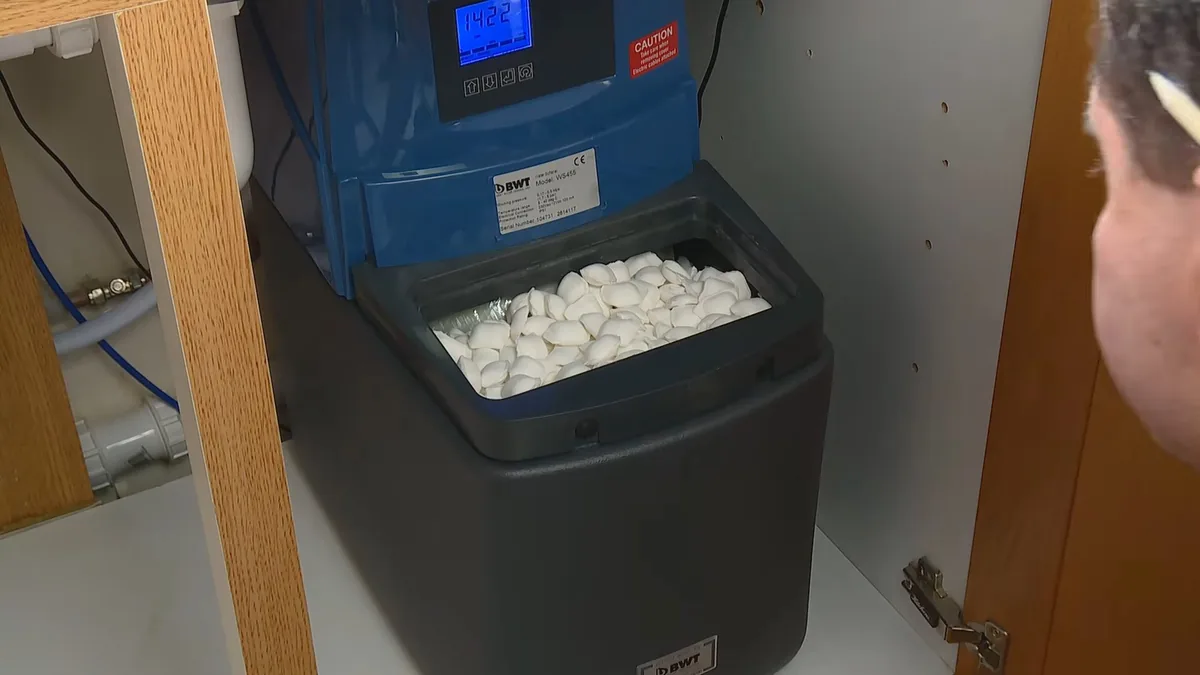
- Check that the brine tank has salt and the salt is not crusted over.
- Confirm the control head is set to the right hardness for your water.
- Look at the bypass valve to be sure it is not left open.
- Test the water after the unit regenerates.
A softener set for hard water but connected to soft water uses salt for nothing. If you inherited a system with a house, a hardness reading can show whether it still makes sense to keep it running.
Questions to ask any seller of a softener or filter
- What is my water's hardness, and where did that number come from?
- What problem does this system solve, and how will we know it worked?
- What does it cost to run per year, including salt, cartridges and water?
- What is under warranty, and for how long?
- Who services it, and what does a visit cost?
These questions apply to a heater problem too. If someone says your water heater failed because of hard water, read the notes on choosing a new heater before agreeing to a softener to protect it.
Water softener questions from Greer homeowners
Is the water in Greer hard?
Not according to the utility reports. Greer CPW's 2025 report lists average hardness at 34.86 ppm, about 2 grains per gallon, which is soft. Greenville Water's May 2026 report lists 4.9 to 6.7 mg/L. A private well can differ, so test it separately.
Do I need a water softener in Greer?
Probably not for hardness on city water. Ask for a hardness reading at your own tap before agreeing to one. If the reading is low, a softener removes little and adds salt, water and cost.
What is the difference between a softener and a filter?
A softener removes hardness minerals. A filter removes particles, chlorine or other contaminants, depending on the type. They solve different problems, so a quote should say which one it is.
Can you service a softener I already own?
Yes. The common problems are salt bridges, a clogged injector, a failed control head and worn resin. A hardness test before and after a service shows whether the unit is working.