
Drains and Sewer Lines
Trenchless Sewer Repair in Greer, SC: When Relining Beats Digging Up the Yard
A sewer line under a driveway, a mature oak or a finished patio turns open-trench repair into a major disruption. Trenchless methods repair the pipe from the inside or pull a new one through the old path. Greer SC Plumbing Experts starts with a camera to find out whether your line qualifies.
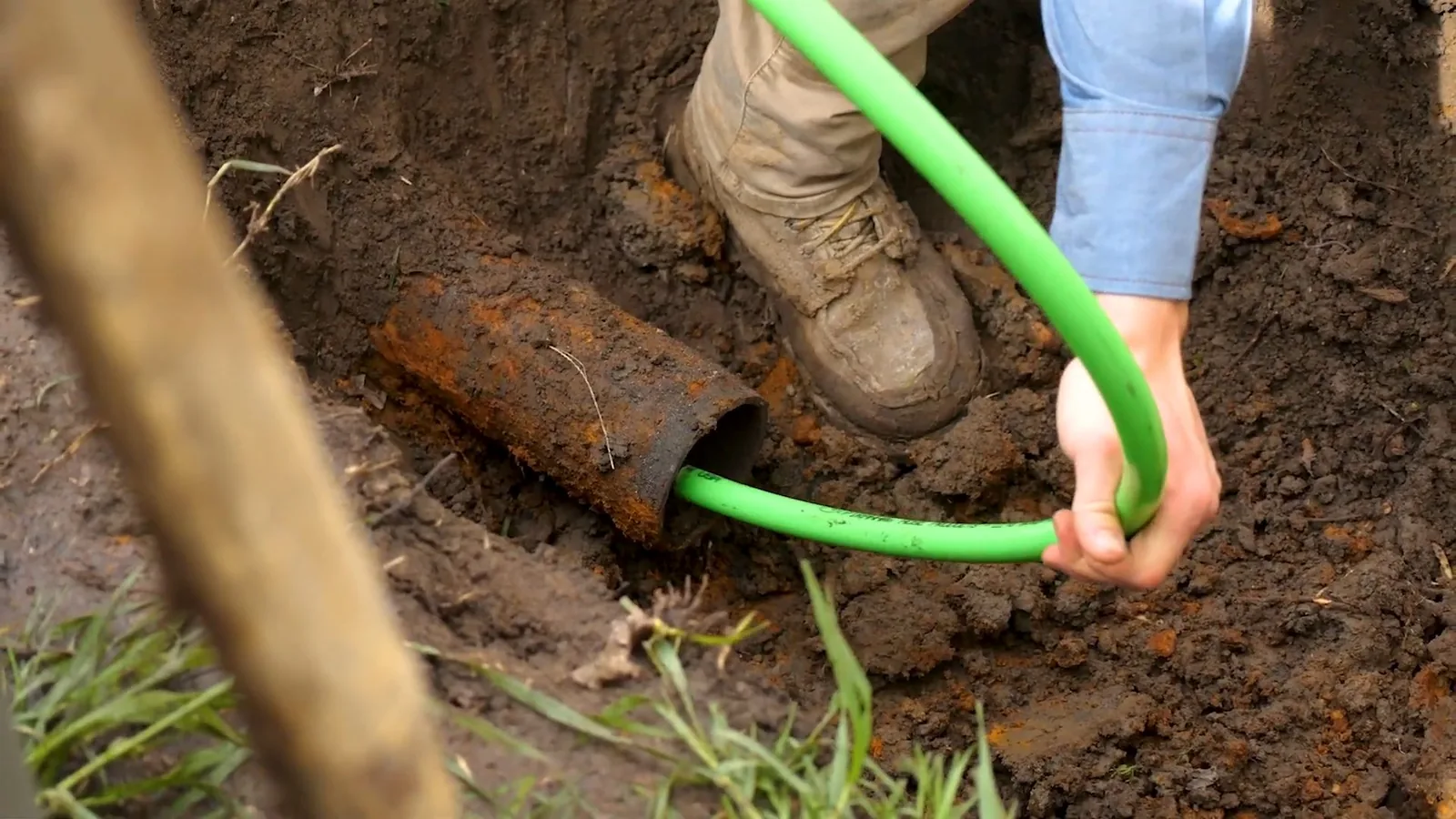
Trenchless or open trench: how to decide
Trenchless is the better choice when the pipe is intact enough to line and something valuable sits above it. Digging is the better choice when the pipe has to be regraded or has collapsed. The camera decides, not preference.
| Question | Trenchless | Open trench |
|---|---|---|
| Digging | Small access pits at one or both ends | A continuous trench along the pipe |
| Works when | The pipe is continuous and can be cleaned to bare wall | The pipe is collapsed, badly offset or sagging |
| Surface disruption | Limited to the access points | Everything over the pipe is removed and restored |
| Pipe path | Follows the old line | Can be rerouted or regraded |
| Record to expect | Camera footage before and after | Open view of the pipe, plus any permit inspection |
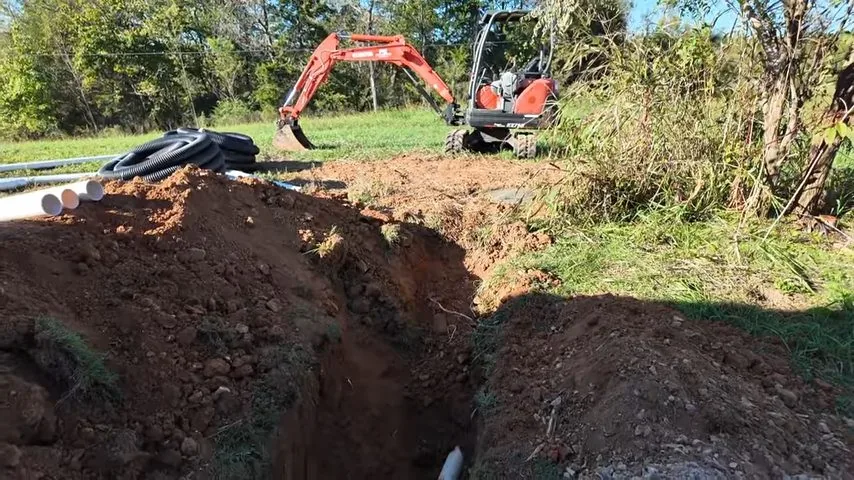
What has to be true for relining to work
- The camera shows a continuous path from one access point to the next, with no collapse.
- The line can be cleaned to bare pipe wall before the liner goes in.
- Any offset at a joint is small enough for the liner to pass.
- The branch connections along the line can be reopened afterward.
- The pipe diameter and any changes in size are known, so the liner is sized to fit.
If any of these fails, the answer is usually a short section of open trench or a different method. A plumber who lines a pipe that fails the camera test is lining over the problem.
Lining versus pipe bursting
Cured-in-place lining
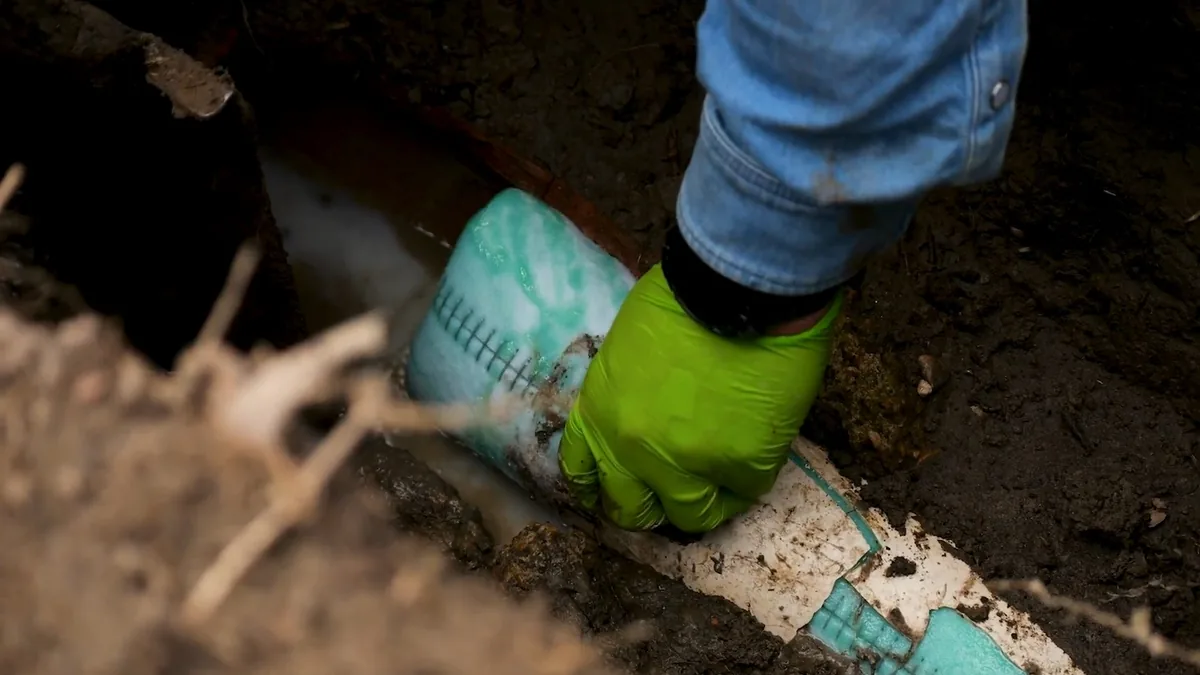
A resin-soaked liner is pulled or inverted into the old pipe and cured, forming a new pipe inside the old one. It seals cracks and joints and gives a smooth wall. The inside diameter ends up slightly smaller, which is rarely a problem for a house line but is worth asking about.
Pipe bursting
A new pipe is pulled through the old path while a cutting head breaks the old pipe outward. It suits pipe that is too damaged to line, and it needs access pits and care around neighboring utilities.
Both methods still need pits at each end, so the 811 locate request applies to a no-dig job as well. Ask whether it has been made.
What a trenchless job looks like from the yard
Expect a small pit at each end of the section being repaired, usually near the house and near the connection to the main or the cleanout. The old line is cleaned, the camera confirms the path, and the liner or the new pipe goes in. After curing, a camera look shows the finished pipe and the reopened connections.
Plan around the access points. Tell the plumber about sprinkler lines, fences and trees near the line, because the pits and the equipment need room. Ask what restoration is included afterward, so the pit areas do not become a surprise.
Ask whether your sewer line can be relined
Tell us what is backing up and what sits above the line. We will explain what the camera has to show before lining is an option.
Driveways, trees and soil: what they change for relining
Hardscape and mature trees are the usual reasons people ask about trenchless work. They affect where access pits can go and how much restoration an open trench would need. They do not change what the pipe needs.
One related caution. USDA describes the Cecil red clay of the Piedmont as well drained with low shrink-swell, so shifting soil is not an automatic explanation for a failed pipe. Ask what the camera shows as the cause, whether roots, an open joint or old pipe, rather than accepting that the ground moved.
Source: USDA Cecil series description
Questions to ask a plumber who proposes lining
- What is the liner made of, and how is it cured?
- How will the branch connections be reopened?
- What will the pipe diameter be after lining?
- Is a camera look after lining included, and will you receive the footage?
- What does the written warranty cover, and who stands behind it?
- Who is pulling the permit, and from which office?
The permit question matters because Greer sits in two counties. Greenville County's residential plumbing permit application covers house sewers that are replaced or repaired, and Spartanburg County and the City of Greer run their own offices.
Where slab-leak rerouting overlaps
The no-dig method also applies to lines under a floor. Rerouting a line that leaks under the slab can avoid breaking concrete, and that work is covered on the slab leak repair page. It is the same job reached from a different search, kept in both places on purpose.
If the camera shows damage that makes lining a poor fit, the path goes back to traditional sewer line repair.
Trenchless repair questions from Greer homeowners
When is trenchless pipe lining better than digging up a sewer line?
When the pipe is continuous and can be cleaned to bare wall, and something valuable sits above it such as a driveway, a patio or a mature tree. Digging is better when the pipe is collapsed, badly offset or has a sag that needs regrading. A camera look decides which applies.
Does lining shrink the pipe?
Slightly. The liner sits inside the old pipe, so the inside diameter ends up a little smaller. For most house lines the flow is unaffected, but it is a fair question to put to the plumber before work begins.
Does trenchless repair need a permit?
It often does. Greenville County's residential plumbing permit application covers house sewers that are replaced or repaired, and Spartanburg County and the City of Greer have their own offices. Ask the plumber which office the permit comes from and request the permit number afterward.
Can a collapsed pipe be lined?
Usually not. A liner needs a continuous path to pass through. A collapsed section generally has to be dug out, or the pipe replaced by a bursting method where the camera shows it is possible.